
Education for disarmament and non-proliferation
Building a culture of responsibility: education for disarmament and non-proliferation Journal of Strategic Trade Control, Special Issue, Vol. 2 (September 2024) I am honoured to have been invited to contribute to the Special Issue of the Journal of Strategic Trade Control (JoSTC) focussed on Training programs to counter current and emerging biological and chemical proliferation risks: themes, practices, and lessons learnt. Between January 2018 and December 2023, I was involved in the design, development and implementation of a master’s course on dual-use technology transfer control, which was implemented in Central Asia through the International Science and Technology Centre (ISTC) and …
Trying to picture a treaty for a Middle East Zone free of non-conventional weaponry
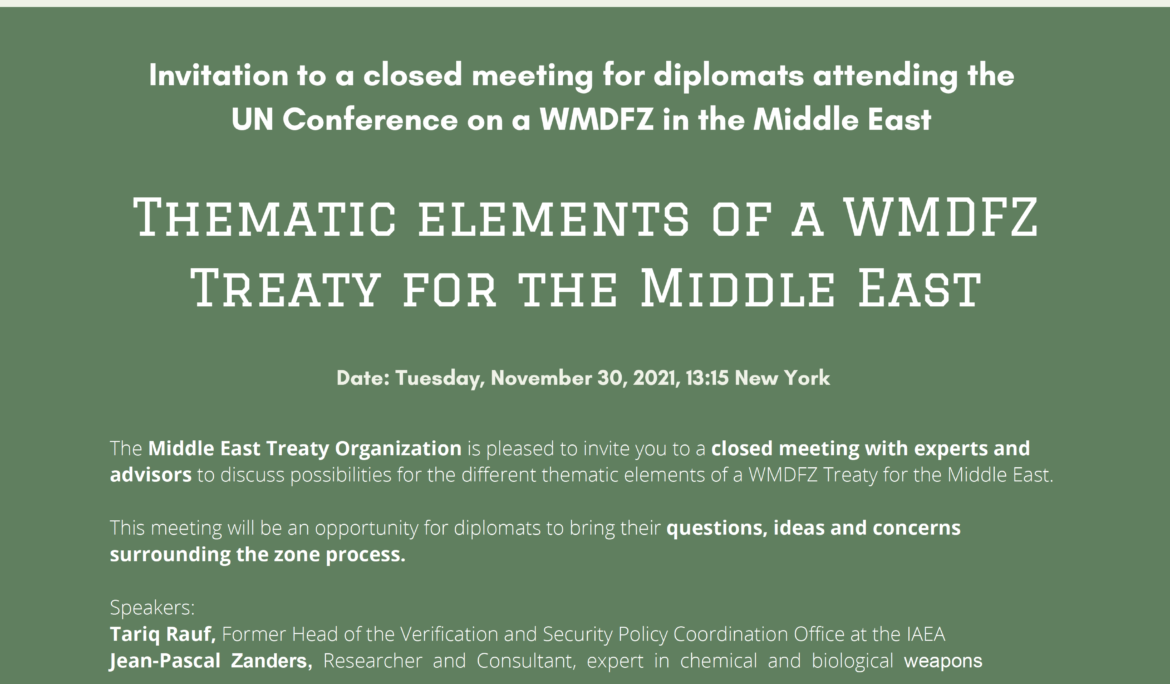
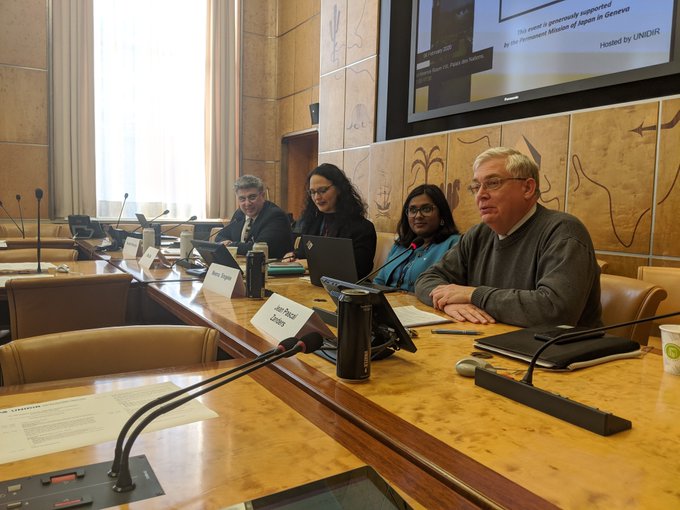
On 30 November, the Middle East Treaty Organisation (METO) – a coalition of civil society activists and practitioners – organised an informal virtual discussion round with Middle Eastern diplomats participating in the Second Session of the Conference on the Establishment of a Middle East Zone Free of Nuclear Weapons and Other Weapons of Mass Destruction under the auspices of the UN Office of Disarmament Affairs. That session should have taken place last year, but the COVID-19 pandemic forced postponement of in-person UN diplomatic gatherings. Last Tuesday’s informal discussion forms part of METO’s efforts to draft and promote a treaty for …
A Middle East Zone Free from Non-conventional Weapons (4)
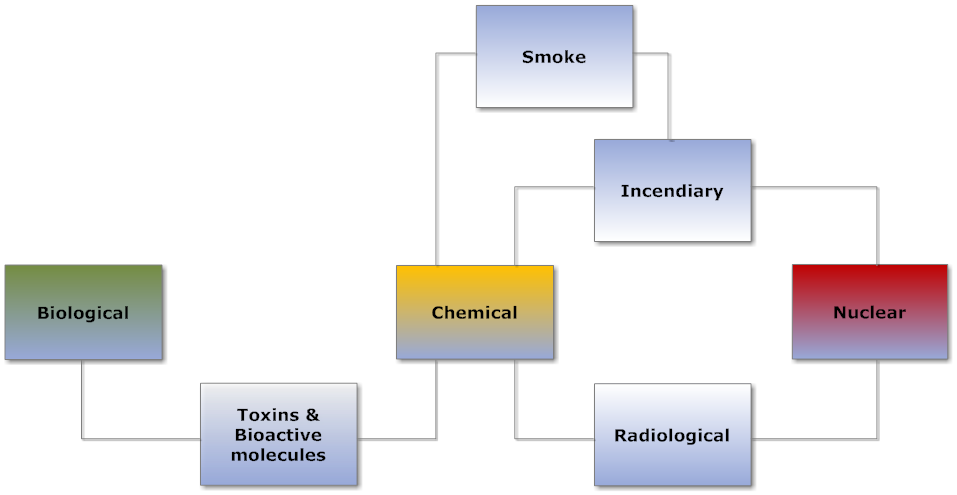
Part 4: Clear legal definitions at the core of the future treaty This article is the fourth in a series of blog postings exploring the opportunities and challenges facing a new series of conferences at the United Nations in New York to eliminate non-conventional arms – essentially nuclear weapons, and to a lesser extent chemical and biological weapons (CBW) – from the military arsenals in the Middle East. Why legal definitions matter By adopting Decision 73/546 on 22 December 2018, the UN General Assembly tasked the newly established conference with ‘elaborating a legally binding treaty establishing a Middle East …
A Middle East Zone Free from Non-conventional Weapons (3)
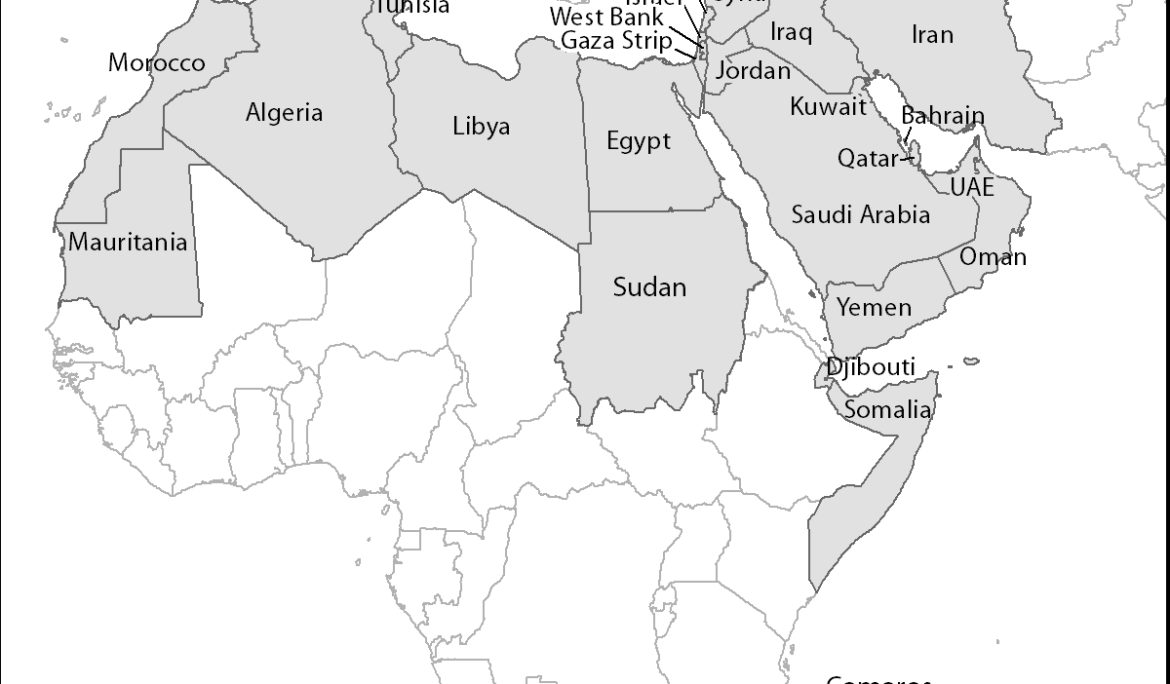
Part 3: Defining the Middle East, a loaded question In November 2019 a conference at the United Nations in New York (report here) marked a fresh round of diplomatic efforts to eliminate non-conventional arms – essentially nuclear weapons, and to a lesser extent chemical and biological weapons (CBW) – from the military arsenals in the Middle East. As indicated in the second part of this series, participants in the new conference series depart from the definition of the Middle East used by the International Atomic Energy Agency (IAEA). At the UN Institute for Disarmament Research (UNIDIR) seminar ‘The Middle …
A Middle East Zone Free from Non-conventional Weapons (2)
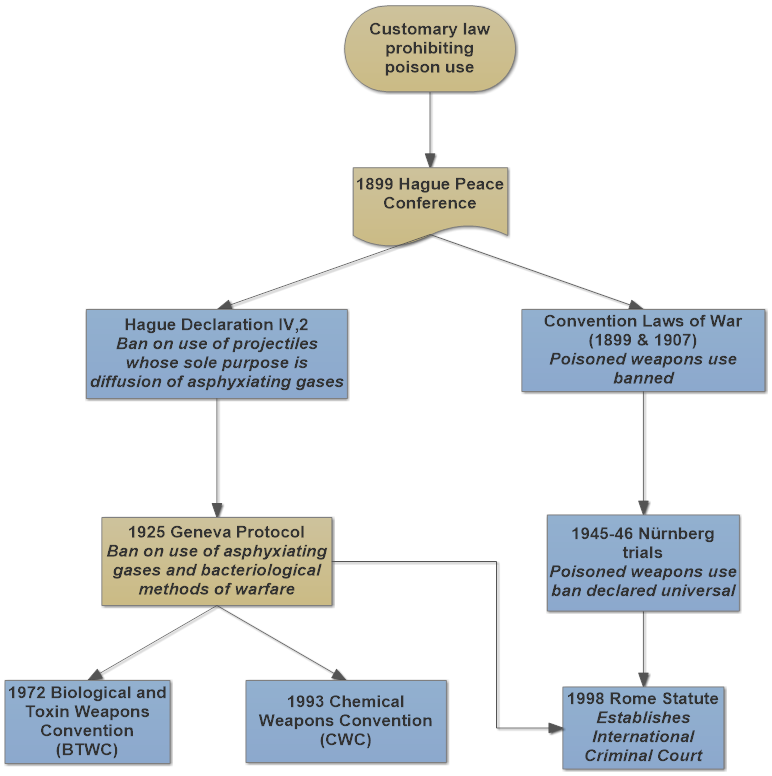
Part 2: Treaties governing chemical and biological weapons In November 2019 a conference at the United Nations in New York marked a fresh round of diplomatic efforts to eliminate non-conventional arms – essentially nuclear weapons, and to a lesser extent chemical and biological weapons (CBW) – from the military arsenals in the Middle East. This article is the second in a series of blog postings exploring the opportunities and challenges to ensure that the regional risks of CBW threats and use – chemical weapons (CW) were and, as I am writing, are part of conflicts in the Middle East …
A Middle East Zone Free from Non-conventional Weapons (1)
Part 1: A new process to disarm the Middle East In November 2019 a conference at the United Nations in New York marked a fresh round of diplomatic efforts to eliminate non-conventional arms – essentially nuclear weapons, and to a lesser extent chemical and biological weapons (CBW) – from the military arsenals in the Middle East. The previous initiative died in 2015 as the review conference (RevCon) of the 1968 Nuclear Non-Proliferation Treaty (NPT) failed to agree on a consensus document. The new series of annual meetings takes place outside the NPT RevCon cycle, which consists of a quinquennial …
Education on CBRN-relevant dual-use technology transfers in Moldova
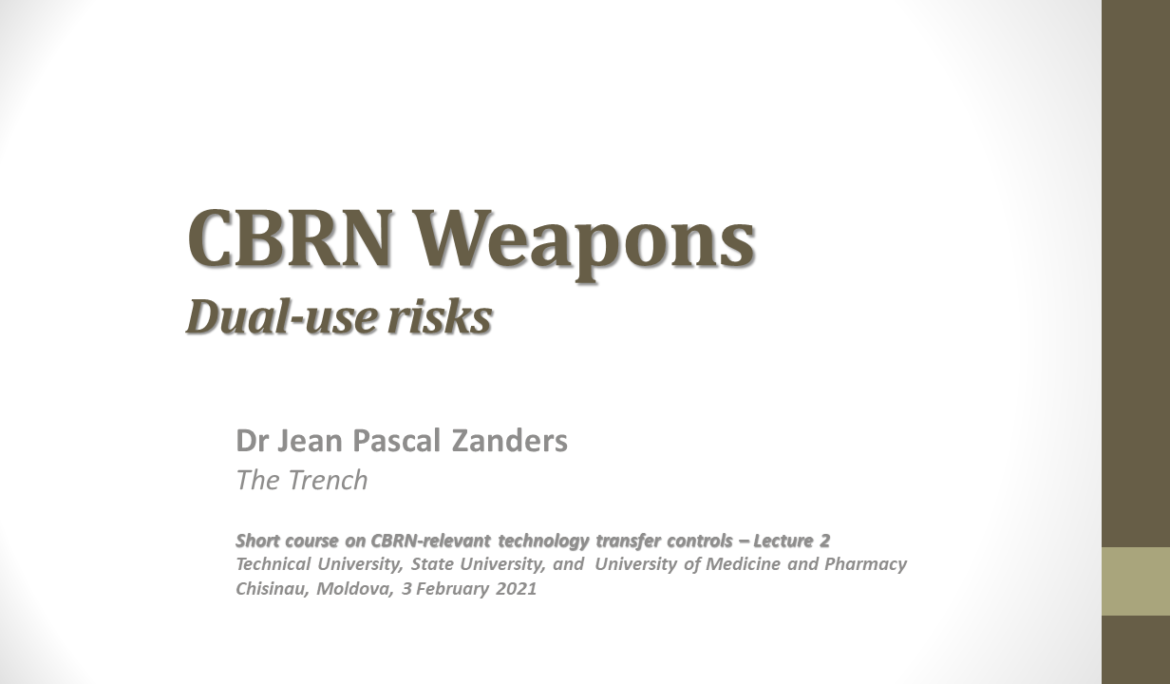
The Science and Technology Centre in Ukraine (STCU) just published a summary of the short virtual course on CBRN-relevant dual-use technology transfers I taught in Moldova on 2 – 5 February. The course was another step in the project to design, develop and teach a full master’s course on export controls and technology governance for the GUAM countries (Georgia, Ukraine, Azerbaijan, and Moldova). As I described in a previous blog post, the educational initiative forms part of a larger Targeted Initiative funded by the European Commission that is implemented through the STCU and International Science and technology Centre (ISTC) in …
COVID-19 interferes with CWC and BTWC meeting schedules
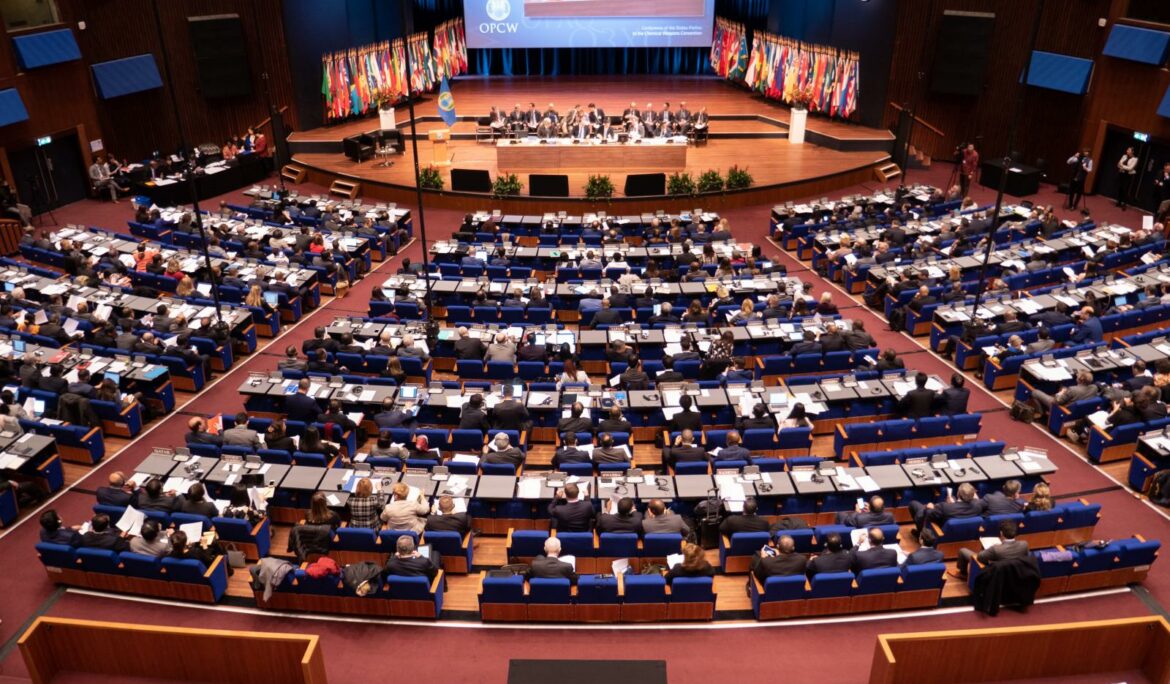
COVID-19 is messing up the diplomatic disarmament and arms control agendas. On 27 March Ambassador Gustavo Zlauvinen from Argentina announced as President-Designate the postponement of the 10th Review Conference of the Nuclear Non-Proliferation Treaty (NPT). Initially scheduled for 27 April – 22 May 2020, it was to take place by April 2021. The deadline was moved up to August. However, because of the United Nation’s original schedule of meetings for 2021 combined with the many rescheduled meetings of this year, the only possible opening in the agenda was an impractical slot from 4 to 29 January. The pandemic’s resurgence in …

Disarmament education: Road-testing a master’s course on CBRN dual-use technology transfer controls
From 17 until 28 June I ran an Executive Course on Export Control at the M. Narikbayev KAZGUU University in Nur-Sultan (formerly Astana), Kazakhstan. Its goal was twofold. First, it tested in a real university setting parts of a master’s course on chemical, biological, radiological and nuclear (CBRN) dual-use technology transfer controls I have been developing since February 2018. Its second purpose was to attract interest in organising the full master’s course from other Central Asian academic institutes. Set in the broader context of peace and disarmament education, the Executive Course posed considerable challenges from the perspective of educational methodology …
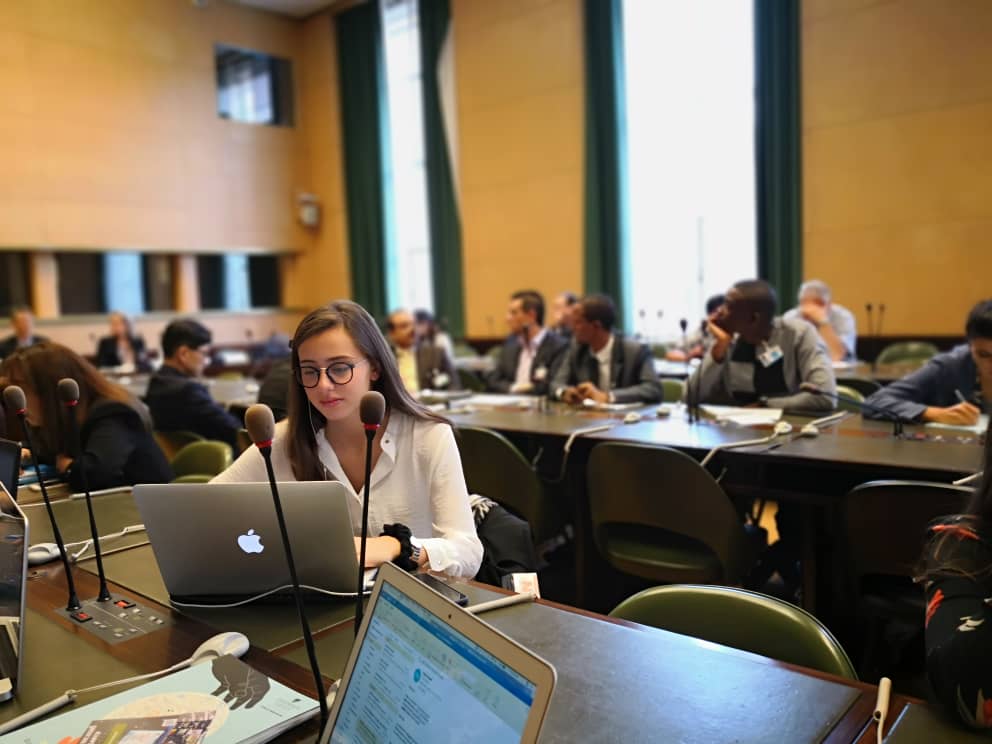
Blog 1 – Experiences of a student at the Meetings of Experts of the Biological and Toxin Weapons Convention
I am Chiara Barbeschi and study Security Studies (BSc) at Leiden University in the Netherlands. Interning at The Trench and representing the non-governmental organisation (NGO) as a Research Associate at the five Meetings of Experts (MXs) of the Biological and Toxin Weapons Convention (BTWC) is an incredible opportunity that Jean Pascal Zanders granted me. Blogging about it is a chance of sharing my perspective, impressions and account of the conference. I know that there are also the daily factual reports Richard Guthrie writes and distributes in the meeting room. My posts convey the thoughts of a student experiencing the BTWC meetings for the first time. MX1 (29 – …